In this project I will plan and deliver a music workshop to a group of people. There are lots of areas that need some thought:
- Equipment needed
- Target audience
- Location
- Subject of workshop
- Detailed plan of what the workshop entails
Wednesday, 2 July 2014

Monday, 30 June 2014
Subject
I need to decide what I will deliver the workshop on. It needs to be something I am suitably proficient in, rather than something I can't really do myself...
I've come up with three options:
- Stomp Workshop
- Jazz Workshop
- Vocal Workshop
Stomp Workshop
The advantage of doing this would be that the kids will instantly connect with it, and everyone can participate. It would consist of breaking the audience into two groups, teaching them different rhythms and then putting it together at the end - or something like that. The disadvantage of this is getting the equipment; I could probably get hold of some junk but I'd have to get a lot. Even so, this is only a minor issue and overall this would probably be the easiest workshop to deliver.
Jazz Workshop
From my point of view this would be my favourite to give, because I love jazz and I think kids don't get to experience much of it in the curriculum, let alone outside school. The idea would be to attempt to teach very basic improvisation to the kids, with percussion and their own instruments. This would, however, be difficult to arrange and would involve organising the kids to bring in their instruments, as well as trying to aquire some percussion. Also, the kids might get bored quite easily if they don't enjoy jazz music.
Vocal Workshop
The vocal workshop would involve much less equipment, and again it is something that I think most kids would like. Singing is another thing that doesn't happen enough in primary schools, so it would be nice to give them that experience. I'm not entirely sure how I'd structure the workshop but it would probably involve basic harmony. The only thing is, I'm not as confident singing as I am with rhythms or jazz, so it might not be the best plan.
I've come up with three options:
- Stomp Workshop
- Jazz Workshop
- Vocal Workshop
Stomp Workshop
The advantage of doing this would be that the kids will instantly connect with it, and everyone can participate. It would consist of breaking the audience into two groups, teaching them different rhythms and then putting it together at the end - or something like that. The disadvantage of this is getting the equipment; I could probably get hold of some junk but I'd have to get a lot. Even so, this is only a minor issue and overall this would probably be the easiest workshop to deliver.
Jazz Workshop
From my point of view this would be my favourite to give, because I love jazz and I think kids don't get to experience much of it in the curriculum, let alone outside school. The idea would be to attempt to teach very basic improvisation to the kids, with percussion and their own instruments. This would, however, be difficult to arrange and would involve organising the kids to bring in their instruments, as well as trying to aquire some percussion. Also, the kids might get bored quite easily if they don't enjoy jazz music.
Vocal Workshop
The vocal workshop would involve much less equipment, and again it is something that I think most kids would like. Singing is another thing that doesn't happen enough in primary schools, so it would be nice to give them that experience. I'm not entirely sure how I'd structure the workshop but it would probably involve basic harmony. The only thing is, I'm not as confident singing as I am with rhythms or jazz, so it might not be the best plan.
Saturday, 28 June 2014
Target Audience
I have decided to go with asking the local primary school if I could come in one afternoon to do the workshop. I know the person who organises the school's musical activities, so I already have a good link with the school.
I will email her and ask her if I can get permission to do the workshop - she might even help me.
I will email her and ask her if I can get permission to do the workshop - she might even help me.
Thursday, 26 June 2014
Change!!!
I've decided that because I haven't been able to organise this workshop in the local primary school, I will do something slightly different. The idea is to do an improvisation workshop with people my age who already play instruments.
My initial plans consist of the following:
- a bit of scale & harmony theory
- choosing a chord sequence (e.g. 12 bar blues) and get people to think for themselves about what would be a good melody/harmony on their particular instrument
- working through soloing
- performance style and confidence
- group jam
This structure includes the basics of improvisation and how to pull it off properly.
I will run this workshop with some of the members of my band (who can't really improvise at the moment) and some of my other friends who are not as active musically, but used to play an instrument or are just interested in improvisation.
My initial plans consist of the following:
- a bit of scale & harmony theory
- choosing a chord sequence (e.g. 12 bar blues) and get people to think for themselves about what would be a good melody/harmony on their particular instrument
- working through soloing
- performance style and confidence
- group jam
This structure includes the basics of improvisation and how to pull it off properly.
I will run this workshop with some of the members of my band (who can't really improvise at the moment) and some of my other friends who are not as active musically, but used to play an instrument or are just interested in improvisation.
Tuesday, 24 June 2014
Harmony & Scale Theory
- concepts of minor and major (which most of them will probably know).
- avoid notes in both of these types of keys (e.g. 4th in the tonic major, or 6th in the tonic minor)
- cycle of 5ths
- what kind of 7ths to use and when to use them (3 types: major, minor, dominant)
- passing notes
Avoid Notes:
This table displays the 'avoid notes' (notes which when improvising it is unconventional to use as accented) for each degree of the scale.
Cycle Of 5ths

7ths
Major
Major 7ths - 11 semitones, used on tonic, subdominant
Minor 7ths - 10 semitones, used on supertonic, submediant, mediant
Dominant 7ths - 10 semitones (with maj 3rd), used on dominant
Minor
Major 7ths - 11 semitones, used on mediant, submediant
Minor 7ths - 10 semitones, used on subdominant
Dominant 7ths - 10 semitones (with maj 3rd), used on dominant
I might not go into this level of detail, but it is useful to know. Also, I won't do this stuff all at once, but I'll intersperse it with the more practical activities.
- avoid notes in both of these types of keys (e.g. 4th in the tonic major, or 6th in the tonic minor)
- cycle of 5ths
- what kind of 7ths to use and when to use them (3 types: major, minor, dominant)
- passing notes
Avoid Notes:
Degree
|
Major
|
Minor
|
Tonic
|
4th
|
6th, b7th
|
Supertonic
|
4th
|
|
Sub-dominant
|
6th
|
|
Dominant
|
1st
|
7th
|
Relative Minor/Major
|
4th
|
1st
|
This table displays the 'avoid notes' (notes which when improvising it is unconventional to use as accented) for each degree of the scale.
Cycle Of 5ths

7ths
Major
Major 7ths - 11 semitones, used on tonic, subdominant
Minor 7ths - 10 semitones, used on supertonic, submediant, mediant
Dominant 7ths - 10 semitones (with maj 3rd), used on dominant
Minor
Major 7ths - 11 semitones, used on mediant, submediant
Minor 7ths - 10 semitones, used on subdominant
Dominant 7ths - 10 semitones (with maj 3rd), used on dominant
I might not go into this level of detail, but it is useful to know. Also, I won't do this stuff all at once, but I'll intersperse it with the more practical activities.
Sunday, 22 June 2014
Chord Sequences
There are several chord sequences which I might use at different times.
- 12 bar blues
- I V VI IV
- I VI IV V
etc.
The I V VI IV sequence might be the easiest to use, because it's very commonly used in most pop music, so people will have heard it before.
- 12 bar blues
- I V VI IV
- I VI IV V
etc.
The I V VI IV sequence might be the easiest to use, because it's very commonly used in most pop music, so people will have heard it before.
Friday, 20 June 2014
Instruments and Resources
I need to discover what instruments people are going to be playing. So far I've got:
- drums
- bass
- piano x2
- guitar x2
- vocals
but other people might play other instruments.
- drums
- bass
- piano x2
- guitar x2
- vocals
but other people might play other instruments.
Wednesday, 18 June 2014
Soloing
I'll have to teach this more or less individually - so I need some sort of activity everyone else can do whilst I'm teaching each person. Maybe some sort of composition task, like coming up with a chord sequence and a melody collectively.
Soloing Points
Piano: scales practice and simple riffs -

listening tips: Bud Powell, Don Pullen, Neal Morse
Guitar: focus on melodic nature of soloing, trying to get off the pentatonic scale... less technical, more musical.
listening tips: Roine Stolt, Brian May, Django Reinhardt
Drums: rhythmic interpretation, shuffle beats, genre-specific playing
listening tips: Mike Portnoy, Mark Guiliana, Neal Peart, Johan Langell
Vocals: scat singing, creating melody, use of pause - http://www.scottmusic.com/Choral%20Tips/Scat%20Singing.pdf
listening tips: Ella Fitzgerald, Roberta Gambarini, Esperanza Spalding
Bass: grooves and fills, finger shapes, riffs and rhythms, walking bass -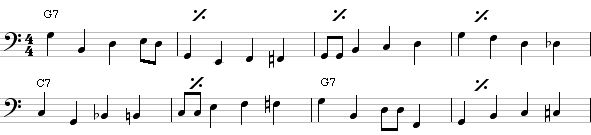
listening tips: Jaco Pastorius, Kristoffer Gildenlöw, Flea
Soloing Points
Piano: scales practice and simple riffs -
listening tips: Bud Powell, Don Pullen, Neal Morse
Guitar: focus on melodic nature of soloing, trying to get off the pentatonic scale... less technical, more musical.
listening tips: Roine Stolt, Brian May, Django Reinhardt
Drums: rhythmic interpretation, shuffle beats, genre-specific playing
listening tips: Mike Portnoy, Mark Guiliana, Neal Peart, Johan Langell
Vocals: scat singing, creating melody, use of pause - http://www.scottmusic.com/Choral%20Tips/Scat%20Singing.pdf
listening tips: Ella Fitzgerald, Roberta Gambarini, Esperanza Spalding
Bass: grooves and fills, finger shapes, riffs and rhythms, walking bass -
listening tips: Jaco Pastorius, Kristoffer Gildenlöw, Flea
Monday, 16 June 2014
Performance Style
This will be all about how to perform.
- Warm up exercises (scales, breathing, instrument-specific warm ups)
- Posture
- Purpose
- Get into the music!
I plan to do an exercise here where everyone plays something really over-the-top, just to get comfortable with the idea of confidence.
- Warm up exercises (scales, breathing, instrument-specific warm ups)
- Posture
- Purpose
- Get into the music!
I plan to do an exercise here where everyone plays something really over-the-top, just to get comfortable with the idea of confidence.
Saturday, 14 June 2014
Group Jam
The purpose behind doing a group jam at the end is to display what everyone will have hopefully learned. This is where we'll try to make a performance out of it the pre-composed melody and chord sequence.
Thursday, 12 June 2014
Timings
At the moment it looks like the best time to do the workshop would be block 5 on a thursday or friday. It would be best if the date was Thursday 3rd, 2nd period, but if not I could also do Friday 28th, 3rd period. I don't know this for sure though so I'll have to double-check with everyone.
Tuesday, 10 June 2014
Change (again)
Sadly, only one person turned up for my workshop, so I have to re-plan things. I need to do the workshop sooner rather than later, so I have to do it over Easter. The problem I had was that I couldn't use my college friends, because they all live quite far away, so I had to change my target audience slightly. The idea then proceeded to morph into a kind of 'ensemble' workshop, rather than strict improvisation.
Sunday, 8 June 2014
Idea
The new idea is based on the improvisation workshop, but is geared for less experienced/younger musicians (because of the target audience available). The plan is to give a very brief explanation of how to write a song/piece of music, then as soon as possible get the kids writing their own stuff, which they will perform to each other at the end.
I have got 7 people who have said they will come, and I think it would be best to split the kids up into 2 groups of 3 and 4. I will make sure that in each group there is at least 1 person who is slightly more experienced musically, to give each group some direction.
I plan to give this workshop on Sunday the 13th of April.
I have got 7 people who have said they will come, and I think it would be best to split the kids up into 2 groups of 3 and 4. I will make sure that in each group there is at least 1 person who is slightly more experienced musically, to give each group some direction.
I plan to give this workshop on Sunday the 13th of April.
Friday, 6 June 2014
Fine-Tuning
I have realised I can't just tell the groups to "write a song" as I think it is too open-ended for them to deal with. Therefore I have decided to give them a rhythm:

This provides a stimulus for them to work with.
Also, I need to provide them with manuscript paper, pencils, and I need to get them to BRING THEIR INSTRUMENTS. This will give them a choice of what they want to play.
This provides a stimulus for them to work with.
Also, I need to provide them with manuscript paper, pencils, and I need to get them to BRING THEIR INSTRUMENTS. This will give them a choice of what they want to play.
Wednesday, 4 June 2014
Workshop
I've now completed the workshop. Here are some images which convey some of what I was doing.


And here are some video links to outline some of what I was doing.
Monday, 2 June 2014
Evaluation
I thought the workshop overall went very well, and there were no major problems, although there are definitely things I could have done to improve.
Firstly, I should have given people more notice with regard to when the workshop was happening, because some people had other things planned, and I only had 7 people there. However, it might not be such a bad thing because smaller groups are easier to work with, and if there had been any more people I would have had to make 3 groups which wold have been more difficult to supervise.
Secondly, the session wasn't as long as I'd have liked. The workshop ran from 2 o'clock to for o'clock, which I thought may be too long, but I underestimated the time it takes for the kids to work together and compose a piece. I gave them a final deadline at the beginning of 3:30, but I had to extend that to 3:50 because they weren't ready. Even then, another half an hour would have been useful, but sadly I had said to the parents that it would end at 4 so we had to stop and do the performances earlier than I would have liked (which explains why the performances weren't quite as polished as they could have been).
On the other hand, the workshop in itself was a success, and the kids did manage to put something together (aided by myself) and performed at the end. They all seemed to enjoy it, which was great, especially at the end - one came up to me and said they wanted to do it again next year!
I think they all learned a new skill; whether it was working as an ensemble for the first time, how to compose a short piece of music, or even how to manage a team (in both groups one person seemed to take natural leadership responsibility for the group). So in that regard, the workshop was beneficial for everyone taking part.
Personally I felt it taught me how to organise people more efficiently, and gave me an insight into the lack of opportunity young kids who play instruments have to work together in small ensembles, let alone the fact that they don't really get the opportunity to compose (alone or with others) because they don't know where to start. I really enjoyed the experience because it let me teach them something that I'm passionate about, and perhaps sparked an interest in small ensemble playing & composition.
Firstly, I should have given people more notice with regard to when the workshop was happening, because some people had other things planned, and I only had 7 people there. However, it might not be such a bad thing because smaller groups are easier to work with, and if there had been any more people I would have had to make 3 groups which wold have been more difficult to supervise.
Secondly, the session wasn't as long as I'd have liked. The workshop ran from 2 o'clock to for o'clock, which I thought may be too long, but I underestimated the time it takes for the kids to work together and compose a piece. I gave them a final deadline at the beginning of 3:30, but I had to extend that to 3:50 because they weren't ready. Even then, another half an hour would have been useful, but sadly I had said to the parents that it would end at 4 so we had to stop and do the performances earlier than I would have liked (which explains why the performances weren't quite as polished as they could have been).
On the other hand, the workshop in itself was a success, and the kids did manage to put something together (aided by myself) and performed at the end. They all seemed to enjoy it, which was great, especially at the end - one came up to me and said they wanted to do it again next year!
I think they all learned a new skill; whether it was working as an ensemble for the first time, how to compose a short piece of music, or even how to manage a team (in both groups one person seemed to take natural leadership responsibility for the group). So in that regard, the workshop was beneficial for everyone taking part.
Personally I felt it taught me how to organise people more efficiently, and gave me an insight into the lack of opportunity young kids who play instruments have to work together in small ensembles, let alone the fact that they don't really get the opportunity to compose (alone or with others) because they don't know where to start. I really enjoyed the experience because it let me teach them something that I'm passionate about, and perhaps sparked an interest in small ensemble playing & composition.
Subscribe to:
Posts (Atom)